Moving to Warner Robins, GA: Your Complete Relocation Guide for 2026
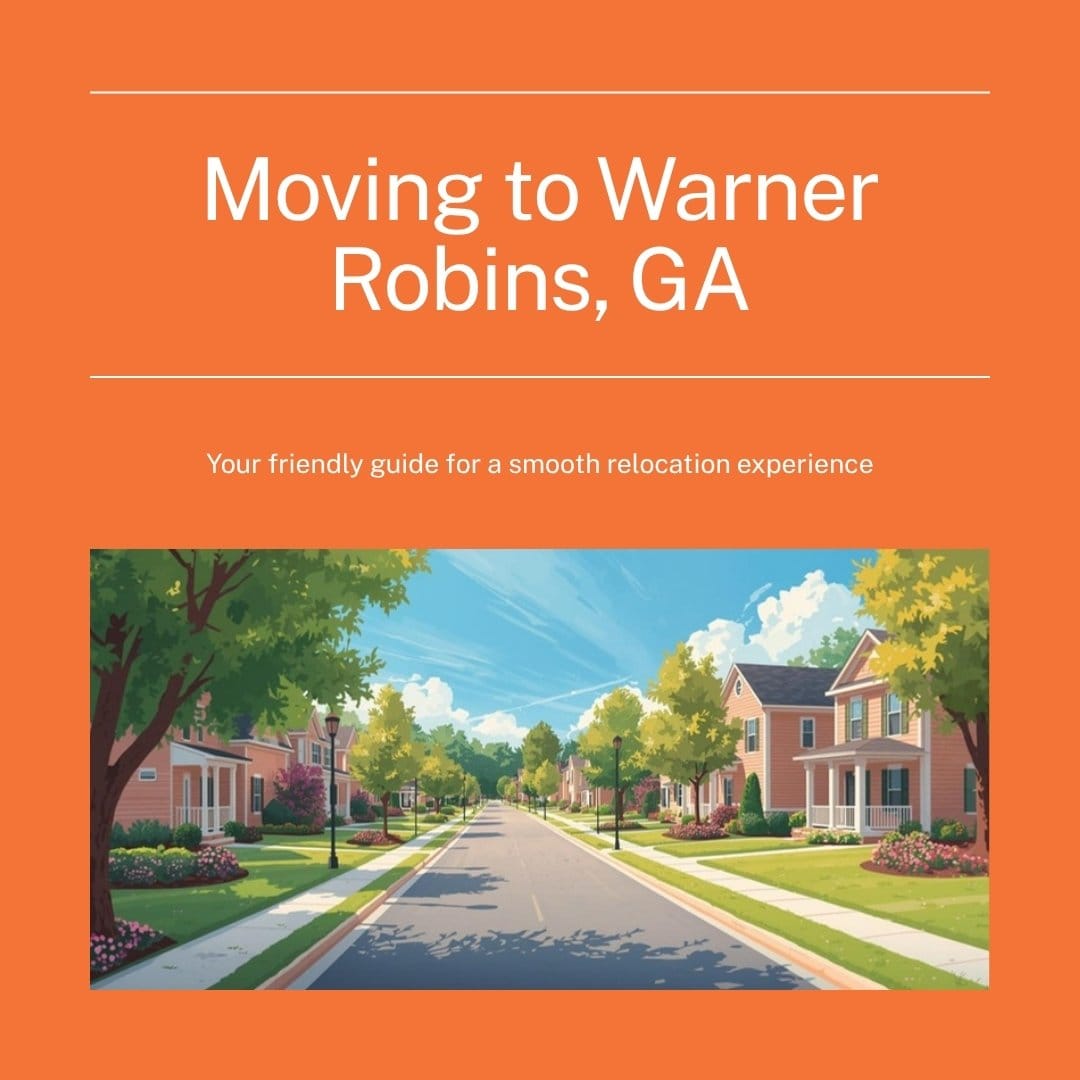
If you're thinking about relocating to Middle Georgia, Warner Robins deserves a serious look. This growing city of about 80,000 people sits roughly 100 miles south of Atlanta and has quietly become one of Georgia's most livable communities — with affordable housing, a strong job market anchored by Robins Air Force Base, and a genuine sense of community that bigger metros simply can't offer.
Whether you're a military family PCS'ing to Robins AFB, a remote worker looking to stretch your dollar further, or just someone ready to put down roots somewhere affordable and welcoming — this guide covers everything you need to know before making the move.
Why Warner Robins Is Worth a Closer Look
Warner Robins consistently earns recognition as one of the best places to live in America, according to U.S. News & World Report. The city has grown steadily over the past two decades, attracting families, veterans, and young professionals who want the benefits of a community-oriented city without the price tag of Atlanta or Savannah.
Its location in Houston County — one of Georgia's fastest-growing counties — means solid public services, well-maintained infrastructure, and a school system that parents genuinely trust. You're just 20 minutes from Macon and about 1.5 hours from Atlanta, so big-city amenities are never far when you want them.
Cost of Living: Your Dollar Goes Further Here
One of Warner Robins' biggest draws is its affordability. The overall cost of living runs about 9–11% below the national average, and you'll feel that difference across nearly every spending category. Groceries cost roughly 5% less than average, utilities run about 20% lower than the national norm, and transportation costs are about 20% cheaper than the U.S. average.
In practical terms, a single person can live comfortably here for around $2,200 per month, while a family of four typically spends about $4,800 per month. That's significant savings compared to almost any major metro area in the country.
Housing: What the Market Looks Like in 2026
Warner Robins offers solid housing value — especially compared to Atlanta. As of early 2026, median home prices range from about $208,000 to $255,000 depending on the neighborhood and zip code. That's 30–40% below the national median, giving first-time homeowners and growing families real buying power.
Renters do well here too. Average rent runs just over $1,000 per month across all unit types, with studios at around $680–$730/month, one-bedrooms at $895–$1,007/month, and two-bedrooms in the $1,025–$1,274/month range. Compare that to Atlanta, where a two-bedroom apartment can easily run $1,800–$2,200/month.
Buyers have plenty of options across price ranges. Well-maintained homes from the 1970s–1990s typically start at $175,000–$250,000. New construction in the southeastern corridor runs $250,000–$350,000, and larger custom homes in established upscale neighborhoods can reach $400,000–$600,000.
Neighborhoods to Know
Warner Robins has neighborhoods to suit almost every lifestyle. Hatcher and Woodard Estates are popular for buyers seeking larger, established homes — properties here typically sell in the $400,000–$600,000 range. Imperial Forest is a beloved community known for large, wooded lots and easy access to Lake Joy and Houston Lake, ideal for families who want a peaceful, tree-lined setting.
South Warner Robins is where most new construction is happening — newer subdivisions, modern floorplans, and plenty of retail and dining close by. For a deeper dive into specific areas, check out our complete guide to the best neighborhoods in Warner Robins.
Jobs and the Local Economy
Warner Robins' economic foundation is remarkably stable. Robins Air Force Base — the largest single-site employer in Georgia — generates an estimated $4.2 billion in annual economic impact and supports around 22,000 jobs in military, civilian, and contractor roles. Positions span logistics, engineering, IT, aircraft maintenance, and administration across all skill levels.
This military anchor keeps unemployment consistently low, typically running between 3.0% and 3.6%. Even during national economic downturns, Warner Robins tends to weather the storm better than most communities. Beyond the base, healthcare, retail, and service industries round out the local economy — and Macon's larger job market is just 20 minutes away for those willing to commute.
Schools: A Big Reason Families Choose Warner Robins
The Houston County School District is one of the strongest reasons families choose to relocate here. Serving over 30,000 students across 33+ public schools, the district consistently outperforms Georgia state averages in reading and math. The high school graduation rate stands at 88%, and standout schools like Veterans High School and Bonaire Middle School rank among the best in the state.
Private and charter options are available for families who prefer alternatives, and the Houston County Career Academy gives high school students hands-on experience in healthcare, IT, engineering, and skilled trades — preparing them for both college and careers.
Weather: Beautiful Seasons, Honest Caveats
Georgia weather is worth understanding before you move. The good news: Warner Robins enjoys 223 sunny days per year, mild winters with little to no snow, and genuinely beautiful springs and falls. If you're moving from the Northeast or Midwest, the mild winters alone may feel like a reward.
The honest caveat is summer. July through September regularly hit the mid-90s to over 100°F, and Georgia humidity makes it feel even hotter. Most locals adapt after their first season, but it's worth knowing what you're signing up for. Spring also brings thunderstorms and the occasional tornado — severe weather awareness is simply part of life in Middle Georgia.
Getting Around the City
Warner Robins is a car-dependent city — there's no meaningful public transit system or walkable downtown core, and a vehicle is essential for daily life. That said, the road network is well-developed, with Watson Boulevard, Russell Parkway, and the Ga-96 corridor providing easy access to shopping, dining, and services throughout the city.
The average commute time is just 20.4 minutes — below the national average. Rush-hour congestion has increased as the city grows, especially on Watson Boulevard between 7–9 AM and 4–6 PM, but overall, getting around Warner Robins remains manageable compared to larger Georgia cities.
Is Warner Robins the Right Move for You?
Warner Robins is a genuinely excellent fit for military families, young families seeking great schools and affordable homes, remote workers escaping high-cost metros, and retirees looking for a lower cost of living and a community-oriented lifestyle. It's one of those cities that tends to surprise people — once you're here, you tend to stay.
It may not be the right fit if you need walkable urban living, a vibrant nightlife scene, or the cultural density of a major metro. But if affordability, safety, and community are your priorities, Warner Robins has a lot going for it.
Thinking about making the move? Explore more of our Warner Robins guides right here on Warner Robins Weekly — from the best neighborhoods to local restaurants, parks, and schools, we've got everything you need to know about life in Middle Georgia.